Resource Search

Provides access to all site resources, with the option to search by species common and scientific names. Resources can be filtered by Subject, Resource Type, Location, or Source. Search Help

Displaying 421 to 440 of 593

  • Smokies Nonprofit Invites Public to Participate in Smokies Most Wanted

    • Feb 26, 2022
    • Discover Life in America.

    • Discover Life in America, the nonprofit research partner of Great Smoky Mountains National Park, is inviting the public to participate in its latest project, Smokies Most Wanted, an initiative that allows visitors to help conserve park species by recording sightings of animals, plants and other organisms from their smartphones. Powered by the nature app iNaturalist, Smokies Most Wanted encourages park visitors to document any organism they encounter while hiking, camping, or otherwise enjoying the park — from birds to wildflowers, insects to lichens. DLiA then uses the data collected through iNaturalist for a variety of functions, like recording new park species or detecting invasive ones, learning about under-studied or rare species, and mapping species across the park.

      For more information about the Smokies Most Wanted project, visit dlia.org/smokiesmostwanted — or browse the list of Smokies Most Wanted species at inaturalist.org/guides/9115.

  • Snake River Quagga Mussel

    • Sep 2023
    • Idaho Department of Agriculture.

    • The Idaho Department of Agriculture (ISDA) has confirmed the presence of quagga mussel in the Mid-Snake River. Quagga mussel larvae was first detected in the Snake River near Twin Falls on September 18, 2023, by routine monitoring conducted by the ISDA. If nothing were done, quagga mussels would quickly take over waterways. They would irreparably harm water use in Idaho. These findings mark the first time a rapid response plan has been put into action for quagga mussels in Idaho.
       

  • South Carolina Officials Announce Infestation of Asian Longhorned Ticks, Ask Public to Help Limit Spread of Tick-Borne Diseases

    • Jul 8, 2022
    • Clemson University.

    • South Carolina public health and livestock officials have recently identified a large population of Asian longhorned ticks infesting a pasture at a cattle farm in York County. This invasive species of tick is not commonly found in the United States, and bites from these ticks have caused illnesses in people, animals and livestock in other countries. As of June 2022, the U.S. Department of Agriculture (USDA) reports Asian longhorned ticks were first identified in the United States in 2010 and have since been found in 17 states. In South Carolina, a small number of these ticks were identified in 2020 on shelter dogs in Lancaster and Pickens counties.

      To help state officials learn more about the prevalence of Asian longhorned ticks in South Carolina, residents are asked to carefully submit ticks suspected to be Asian longhorned ticks for confirmatory identification. This surveillance will help determine tick species presence, distribution, seasonality, and potential tick-borne disease risks.

  • South Dakota GFP Seeking Comments on Draft Aquatic Invasive Species Strategic Plan

    • Dec 13, 2022
    • South Dakota Game, Fish and Parks.

    • The South Dakota Game, Fish and Parks (GFP) is seeking comments on the draft "Aquatic Invasive Species (AIS) Strategic Plan." All individuals interested in AIS management in South Dakota have from now through December 31, 2022, to provide suggestions and comments on the revised plan in its current form. The draft AIS strategic plan can be found online at: https://gfp.sd.gov/management-plans/.

  • Southeast (SE) Bat Hub

    • North American Bat Monitoring Program.

    • The Southeast (SE) Bat Hub was created in summer 2022 to coordinate North American Bat Monitoring Program (NABAT) survey projects in the Southeastern states. The Hub provides services, updates, and content to assist the NABat efforts across the region.

      Since 2006, white-nose syndrome (a fungal disease) has been infecting bat populations across the U.S. This disease has killed some species of bats, such as the tricolored bat and northern long-eared bats at alarming rates.
      See also: The Southeast Bat Hub Coordinates NABat Monitoring Efforts in the Southeast (U.S. Forest Service, CompassLive - Dec 12, 2023)

  • Spatially Targeted Drone Carries Biocontrol Weevil to Hard-to-Reach Patches of Mile-a-Minute Weed

    • 2020
    • USDA. Forest Service.

    • Inadvertently introduced in the northeastern United States in the 1930s, mile-a-minute weed is a highly aggressive invasive plant that is replacing native species in many areas of the Nation. While a biocontrol agent has been identified, finding and reaching dense patches of mile-a-minute weeds has been a problem for land managers. The solution may be drones carrying environmentally friendly pods packed with tiny weevils.

  • Species Profile -- African Clawed Frog

    • African clawed frog

      The African clawed frog was first discovered in California in 1968. It was imported for laboratory research and the pet trade. This species can negatively impact native amphibian and fish populations.

  • Species Profile -- African Swine Fever

    • African swine fever research

      African swine fever was first identified in Kenya in 1921 and spread among domestic and wild pigs. This disease is a highly contagious and fatal viral disease affecting domestic and wild pigs; one of the most economically devastating diseases of swine. African swine fever has never been found in the U.S. Illegal entry of swine products and byproducts presents the largest potential pathway for the entry of African swine fever virus.

  • Species Profile -- Argentine Black and White Tegu

    • Argentine black and white tegu

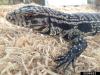
      The Argentine black and white tegu is native to South American and the first established population in the U.S. was documented in Florida in 2006. It's means of introduction was via the pet trade and the Argentine black and white tegu is a generalist omnivore that preys on many native species.

  • Species Profile -- Asian Jumping Worm

    • Asian jumping worm

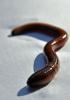
      Asian jumping worms are native to east-central Asia and have been present in the U.S. since the late 1800s, but have been recently invading natural habitats in the Northeast and Midwest. These worms were introduced possibly through the horticultural trade or by anglers using them as bait. Asian jumping worms affect forest habitats by altering soil properties, resulting in reduced food resources for native species.

  • Species Profile -- Asian Longhorned Tick

    • Asian longhorned tick - CDC

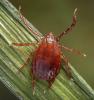
      The Asian longhorned tick is native to eastern Asia. It was first detected in New Jersey in 2017. The full public health and agricultural impact of this tick and spread is unknown. It is a potential vector of several human and animal diseases present in the U.S.

  • Species Profile -- Beech Leaf Disease

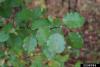
    • Beech leaf disease

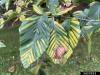
      Beach leaf disease was first observed in Ohio in 2012. It's means of introduction is unknown, although it may have arrived in North America through the transport of wood with an invertebrate vector. It causes a disease of beech trees that disfigures leaves and can lead to tree mortality. 

  • Species Profile -- Box Tree Moth

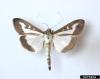
    • Box tree moth

      Box tree moth was confirmed in the U.S. in 2021 after it was imported on nursery plants shipped from Canada. This moth feeds primarily on boxwood plants (Buxus spp.), where heavy infestations can defoliate plants and lead to plant death.

  • Species Profile -- Boxwood Blight

    • Boxwood Blight

      Boxwood blight was first discovered in the United Kingdom in 1994; its origin is unknown. Boxwood blight was detected in the U.S. in 2011 and the means of introduction is unknown. It is a fungal disease of boxwood plants, which are widely used as landscape ornamentals.

  • Species Profile -- Brown Spruce Longhorned Beetle

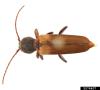
    • Brown Spruce Longhorn Beetle

      Brown spruce beetle is native to Central Europe and Asia. It has not yet been introduced to the United States but has been established in Nova Scotia, Canada since 1990. It can be spread through the movement of infested wood products. This invasive beetle colonizes and attacks healthy spruce trees.

  • Species Profile -- Callery Pear

    • Callery pear (Bradford pear)

      The callery pear (bradford pear) is native is East Asia and was imported to the U.S. in 1908 and first sold commercially in 1961. Callery pear trees forms dense thorny thickets, produces flowers with an offensive odor, and produces large amounts of fruit that litter sidewalks. Additionally, the ‘Bradford’ cultivar is extremely susceptible to damage from storms due to branches having narrow crotch angles; these trees will also split under their own weight after 15-20 years of growth.

  • Species Profile -- Citrus Black Spot

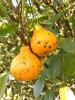
    • Citrus black spot

      Citrus black spot was first discovered in Australia and was introduced to the U.S. in 2010. The means of introduction was possibly through the importation of unregulated and/or non-commercial infected fruit. Citrus black spot is a fungal disease of citrus that decreases yields by causing external blemished and premature fruit drop. 

  • Species Profile -- English Ivy

    • English ivy

      English ivy is native to Europe and was introduced to the U.S. via the nursery trade. The earliest records of naturalization are from the 1870s. English ivy competes with native plants and can spread into tree canopies.

  • Species Profile -- Gambian Giant Pouched Rat

    • Gambian Rat

      The Gambian giant pouched rat is native to African. It was discovered in Florida in 2004, but was first introduced in 1999. The rat was released by an exotic pet breeder. This species is a large rodent capable of becoming highly destructive to agricultural crops and native species and may also serve as a vector of several diseases.

  • Species Profile -- Golden Nematode

    • Golden nematode

      Golden nematode was first discovered in Long Island, New York in 1941. It was possibly transported on military equipment returning from Europe after World War I. If left uncontrolled, the golden nematode is capable of causing a 100% loss in potato yields.