Displaying 201 to 220 of 288
Species Profile -- Spotted Lanternfly
-
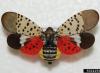
The spotted lanternfly is native to China. It was first detected in 2014 (but appeared to have been present in the U.S. for 2-3 years) and poses a serious economic threat to multiple U.S. industries, including viticulture, fruit trees, ornamentals and timber.
-
Species Profile -- Spotted Wing Drosophila
-
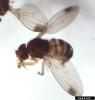
Spotted wing drosophila was first discovered in Hawaii in the 1980's and in the continental U.S. in 2008. It was possibly introduced in fruits imported from Asia. This insect is a pest of unripe berries and stone fruits capable of causing significant economic losses.
-
Species Profile -- Sweet Orange Scab
-

Sweet orange scab is native to South America. It was introduced to the U.S. in 2010, most likely through the movement of infected nursery stock. It's a fungus affecting the fruit of sweet orange and mandarin cultivars.
-
Species Profile -- Tomato Leaf Miner
-
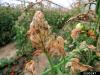
The tomato leaf miner was originally thought to be native to Central America, but now believed to have originated in Peru. This pest is not yet present in the United States. It may be transported through the fruit trade and it's impact caused yield losses of up to 100% in tomatoes.
-
Species Profile -- Varroa Mite
-
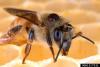
The honey bee varroa mite was first detected in Asia and was introduced to the U.S. in 1987. It's means of introduction was via commercial transportation of infested bee colonies. The varroa mite is a serious worldwide pest of the European honeybee and is a major cause of colony collapses.
-
Spotted Lanternfly Lands in U.S. (Photo Essay)
-
Feb 11, 2019
-
USDA. ARS. Tellus.
-
The spotted lanternfly, first sighted in Pennsylvania, is an invasive pest to the U.S. See this photo essay to learn more about ARS's research efforts.
-
Spotted Lanternfly Reveals a Potential Weakness
-
Jan 19, 2024
-
USDA. Blog.
-
USDA scientists have discovered that the spotted lanternfly, an invasive threat to fruit crops and many trees, may have an Achilles heel – an attraction to vibration. A native of China, the insect was discovered in Pennsylvania in 2014 and has since spread to 13 other states. Though beautiful as an adult, the insect is a voracious eater that feeds on woody and ornamental trees as well as a wide variety of crops and plants. Left unchecked, Pennsylvania alone could lose hundreds of millions of dollars and thousands of jobs.
Richard Mankin, an entomologist with the USDA Agricultural Research Service’s Center for Medical, Agricultural, and Veterinary Entomology in Gainesville, FL, and colleagues found a new way to potentially corral and control the pests. Their research was published in the Journal of Economic Entomology.
-
Spread the Word, Not the Weeds
-
Feb 22, 2021
-
USDA. Blog.
-
Deceptively delicate and fragile in appearance, the Eurasian watermilfoil forms thick mats in shallow areas of a lake, quickly growing and spreading to block sunlight, killing off native aquatic plants that fish and other underwater species rely on for food and shelter. In North America, the plant threatens the diversity and abundance of native plants as well as the ecological balance of lakes and ponds, which in turn adversely affects recreational opportunities. If left unchecked, invasive watermilfoil will spread through a lake, or even to other lakes by transmission. An expert team of USDA Forest Service divers with invasive species and aquatics expertise is focused on rooting out the plant.
-
SRS (Southern Research Station) Releases New American Chestnut Course
-
Dec 10, 2020
-
USDA. Forest Service.
-
The American chestnut (Castanea dentata) was an iconic tree that is now functionally extinct. For a hundred years, researchers from multiple organizations have been working to restore this tree. A free online course – An Introduction to the American Chestnut – is now available. The course covers chestnut taxonomy, silvics, historical importance, ecology, and its demise. A second course in development will cover American chestnut restoration and management.
-
Statement from Agriculture Secretary Tom Vilsack Recognizing National Pollinator Week
-
Jun 17, 2022
-
U.S. Department of Agriculture.
-
Agriculture Secretary Tom Vilsack issued a United States Department of Agriculture (USDA) proclamation in recognition and support of National Pollinator Week -- June 20–26, 2022. Pollinator species, such as bees, other insects, birds, and bats play a critical role in producing more than 100 crops grown in the United States. Honey bee pollination alone adds more than $18 billion in value to agricultural crops annually.
USDA also released its Annual Strategic Pollinator Priorities Report: 2022 [PDF, 1.8 MB] that outlines USDA pollinator research and programmatic priorities for the coming year.
-
Study Reveals Pigs Can Transmit Foot and Mouth Disease Prior to Signs of Sickness
-
Mar 4, 2019
-
USDA. Agricultural Research Service.
-
Foot-and-mouth disease (FMD) virus spreads much more aggressively in pigs than previous research suggests, according to a new study by U.S. Department of Agriculture (USDA) scientists. The study, recently published in Scientific Reports, shows that pigs infected with the FMD virus were highly contagious to other pigs just 24 hours after infection—long before showing any clinical signs of infection such as fever and blisters. Foot-and-mouth disease continues to be the most important foreign disease of livestock worldwide, said Jonathan Arzt, lead investigator and veterinary medical officer with USDA’s Agricultural Research Service (ARS). Although the United States has not had an FMD outbreak since 1929, this highly contagious viral disease, which is sometimes fatal, is still considered a serious threat to U.S. agriculture.
-
Summer Movers: Protect Your New Neighborhoods and Surrounding Areas from Gypsy Moths
-
Jun 1, 2021
-
USDA. Blog.
-
If you are moving this year from a location within the gypsy moth quarantine area to a location outside the quarantine area, please inspect outdoor household items for pests. This is a federal requirement for homeowners moving from gypsy moth quarantine areas.
By complying with the law, you may also save a forest. Gypsy moths are destructive, invasive pests! European gypsy moth larvae feed on over 300 plant species including oak, aspen and elm. Gypsy moths have defoliated more than 83 million acres in the United States since 1970. About 70% of susceptible forests have never been infested and are at risk.
-
Taking on Emerging Animal Diseases at the Source
-
Dec 13, 2023
-
USDA. ARS. Tellus.
-
ARS works with foreign scientists to prevent overseas diseases from spreading to the United States. This collaboration specifically targets research that cannot be conducted in the U.S., either because a disease does not exist here or the expertise in a pathogen resides overseas. Of particular concern are emerging diseases that may spread from animals to infect humans.
-
The Electonic-Nose, an Early Detection Tool for Emerald Ash Borer Larvae
-
Aug 6, 2020
-
USDA. FS. Southern Research Station.
-
Electronic noses are sensitive to a vast suite of volatile organic compounds that every living organism emits. A new USDA Forest Service study shows that e-noses can detect emerald ash borer (Agrilus planipennis) larvae lurking under the bark – an early, noninvasive detection method.
-
The Exotic Bee ID Website Delivers Spectacular Images of the World's Bees
-
May 8, 2023
-
USDA. ARS. Tellus.
-
New website delivers spectacular images and details of some of the world's bees. ARS scientists need your help in monitoring and protecting our important pollinators. The Exotic Bee ID website, designed and developed as a screening aid to support identification of non-native bees, offers spectacular views of some of our most important and not so important pollinators with stunning clarity. Watch the video to learn more about this new tool.
Exotic Bee ID was designed and developed as an interactive screening aid to help those that monitor and intercept non-native bees in the U.S. Theintention is to help reduce the loss of valuable native pollinators through early detection of possible invasives.
-
The Future of Ash Trees
-
Feb 28, 2024
-
USDA. Forest Service.
-
How can an insect that is smaller than a penny cause so much ecological, economic, and cultural devastation? The emerald ash borer, an invasive beetle native to Asia, is one of the most destructive invasive species in North America. These tiny pests killed tens of millions of ash trees in the northeast – and continue to this day.
In Maine, a coalition of Indigenous and non-Indigenous researchers, tribal members, state and federal foresters, conservation groups, and local communities have been working for the past twenty years to prepare for the onset of emerald ash borer in northeastern forests. The group, called the Ash Protection Collaboration Across Wabanakik, is focused on identifying research-informed strategies to protect the future of ash trees.
-
The Invasion of the Forest Destroyers - And how Science is Fighting Back
-
Apr 23, 2021
-
USDA. Forest Service.
-
USDA Forest Service scientists are exploring the impacts of invasive species in forests and rangelands of the United States and developing early intervention strategies that land managers can take as well as strategies for restoring impacted landscapes.
-
The Silent Invasion: Nonnative Trees Threaten American Forests
-
Jan 23, 2024
-
USDA. FS. Southern Research Station. CompassLive.
-
Nonnative tree species are gaining a foothold in forest ecosystems. These trees compete with native species for resources, sunlight, and space. Tree of heaven and Chinese tallow tree are the most invasive tree species in the South, according to a recent study which uses Forest Inventory & Analysis data to create an indicator of nonnative tree regeneration success and can help prioritize the species and locations for treatment.
-
The Trouble with Noxious Weeds: Predicting Herbicide Resistance
-
Sep 2023
-
USDA. FS. Rocky Mountain Research Station. Science You Can Use Bulletin.
-
Noxious weeds plague farmers and ranchers, push out native species, and cause both economic and ecological damage. Synthetic herbicides are often used to control the spread of these plants, however, some species have developed a resistance to these chemicals.
-
The Ultimate Buzz Kill
-
Jun 19, 2023
-
USDA. ARS. Tellus.
-
New techniques use radiation to eliminate dangerous mosquitoes. The Aedes aegypti mosquito is notorious for spreading dengue virus, yellow fever virus, chikungunya virus, and Zika virus, among other ailments. While many mosquitoes do not feed on people, or even domestic animals, this mosquito targets humans causing disease to millions of people throughout the world. ARS researchers with scientists from the University of Florida have developed a new technique for using radiation to control mosquito populations.
-