An official website of the United States government
Here's how you know
Official websites use .gov
A .gov website belongs to an official government organization in the United States.
Secure .gov websites use HTTPS
A lock ( ) or https:// means you’ve safely connected to the .gov website. Share sensitive information only on official, secure websites.
Provides access to all site resources, with the option to search by species common and scientific names. Resources can be filtered by Subject, Resource Type, Location, or Source. Search Help
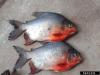
Red-bellied pacu is native to South America. Individual specimens have been caught since the 1960s, but no reproducing populations have yet become established in the U.S. This species was probably introduced through aquarium releases or fish farm escapes. The environmental impact is unknown.
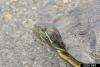
Red-eared slider is native to the Mississippi River drainage. Throughout its nonindigenous range, this species is introduced primarily through pet releases and escapes since the 1930's. This species may compete with native turtle species, although despite its widespread occurrence little is known of the impact on indigenous ecosystems.
Deceptively delicate and fragile in appearance, the Eurasian watermilfoil forms thick mats in shallow areas of a lake, quickly growing and spreading to block sunlight, killing off native aquatic plants that fish and other underwater species rely on for food and shelter. In North America, the plant threatens the diversity and abundance of native plants as well as the ecological balance of lakes and ponds, which in turn adversely affects recreational opportunities. If left unchecked, invasive watermilfoil will spread through a lake, or even to other lakes by transmission. An expert team of USDA Forest Service divers with invasive species and aquatics expertise is focused on rooting out the plant.
Citation: Thompson, D. Q. (1987). Spread, impact, and control of purple loosestrife (Lythrum salicaria) in North American wetlands. Washington, DC: U.S. Dept. of the Interior, Fish and Wildlife Service.
Since arriving to the northern Atlantic Ocean less than 30 years ago, lionfish have quickly become one of the most widespread and voracious invasive species, negatively impacting marine ecosystems—particularly coral reefs—from the northeast coast of the United States to the Caribbean Islands. In a new study, an international research team including the California Academy of Sciences presents four new records of lionfish off the coast of Brazil, confirming the invasion of the predatory fish into the South Atlantic for the first time.
In an effort to monitor invasive northern snakeheads in the Chesapeake Bay and Blackwater River, the Maryland Department of Natural Resources (DNR) announces a new tagging program in conjunction with the U.S. Fish and Wildlife Service (USFWS). Both agencies are placing yellow or blue tags on up to 500 northern snakeheads. Each tagged northern snakehead caught and harvested from now until 2024 could be rewarded with a gift card of $10 or $200 depending on the tag.
In order to qualify, the harvester must report the tag number to USFWS at 800-448-8322, and is asked to take a picture of their harvested and tagged northern snakehead. Only harvested northern snakeheads with reported tags will qualify for gift cards.
Tahoe Resource Conservation District; Tahoe Regional Planning Agency; DOI. Fish and Wildlife Service.
Watercraft are the largest vectors for spreading aquatic invasive species (AIS), such as quagga and zebra mussels into new waterways, making boat inspections a vital aspect of protecting Lake Tahoe and other nearby water bodies.
TAME Melaleuca (collaborative effort between U.S. Department of Agriculture, Agricultural Research Service and University of Florida, Institute of Food and Agricultural Sciences, South Florida Water Management District, and others)