Resource Search

Provides access to all site resources, with the option to search by species common and scientific names. Resources can be filtered by Subject, Resource Type, Location, or Source. Search Help

Displaying 1 to 20 of 55

  • YouTube - Black Carp Identification

    • Google. YouTube; DOI. Fish and Wildlife Service.

  • Invasive Carp in Tennessee

    • Tennessee Wildlife Resources Agency.

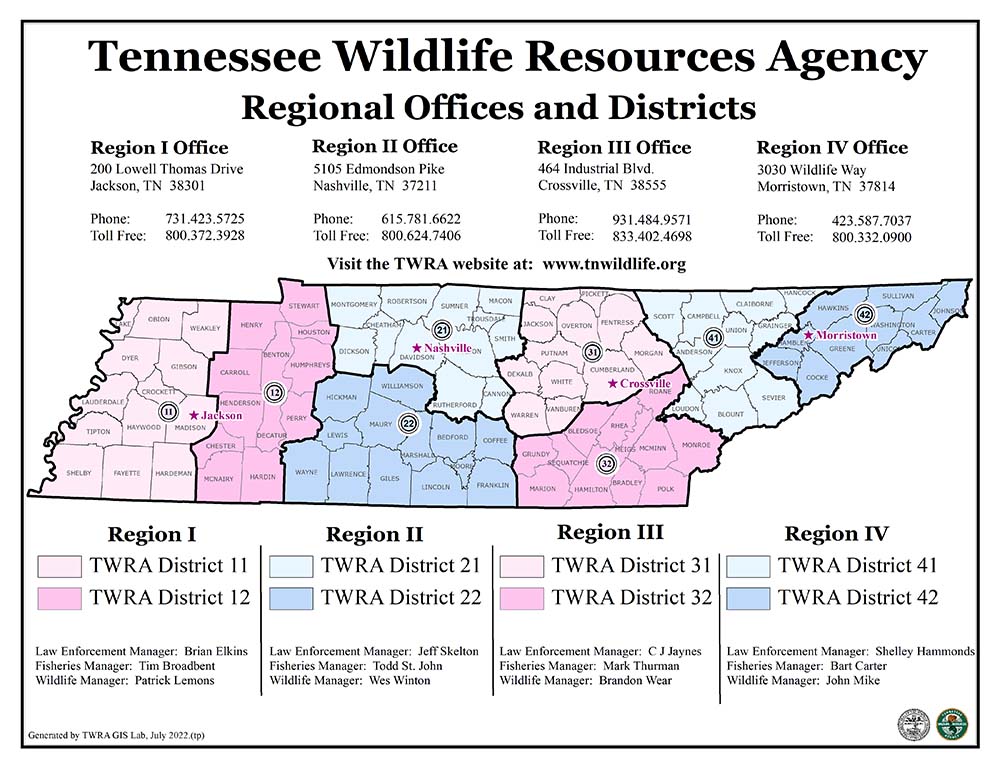
    • The TWRA needs your help in collecting invasive carp. If you catch an invasive carp anywhere in Tennessee other than the Mississippi River OR If you catch any Invasive carp in East Tennessee or other water where invasive carp are not known to be established, the agency is asking that you put it on ice or freeze it and contact them immediately.

      If you are unable to keep the fish, the TWRA asks you to submit photos of the fish and send the image to us. You can contact the nearest TWRA office by phone here, or by email at ans.twra@tn.gov.

  • Fact Sheet: Black Carp [PDF, 1.26 MB]

    • Jan 2018
    • Alberta Invasive Species Council (Canada).

    • See also: Fact Sheets for more information about individual invasive species, including those listed as "Prohibited Noxious" and "Noxious" under the Alberta Weed Control Act

  • Great Lakes Sea Grant Network Releases Comprehensive Report on Asian Carp

    • Nov 2, 2017
    • Ohio State University. Ohio Sea Grant College Program.

    • The Great Lakes Sea Grant Network has released a comprehensive and coordinated outreach and education report on Asian carp in the region. The document includes information on carp life history, movement and behavior, monitoring, control, ecosystem impacts and gaps in current knowledge that need to be addressed further. The plan’s development was funded by the Great Lakes Restoration Initiative through the Asian Carp Regional Coordinating Committee. See final report (Publication OHSU-TB-1511) Education and Outreach on Asian Carp [2017; PDF, 5.6 MB].

  • Asian Carp Canada - Economic Impacts

    • Invasive Species Centre. Asian Carp Canada.

  • AIS Control Plan: Invasive Carp [PDF, 368 KB]

  • Invasive Carp Regional Coordinating Committee Releases 2022 Invasive Carp Action Plan

    • Mar 31, 2022
    • Invasive Carp Regional Coordinating Committee.

    • The Invasive Carp Regional Coordinating Committee (ICRCC) announced the release of its 2022 Invasive Carp Action Plan, a comprehensive portfolio of 60 projects focused on Great Lakes protection. The Action Plan serves as a foundation for the work of the ICRCC partnership — a collaboration of 28 U.S. and Canadian federal, state, provincial, tribal, regional, and local agencies.

  • Science and Innovation for Battling Invasive Carp

    • Mar 2022
    • DOI. USGS. Publications Warehouse.

    • The U.S. Geological Survey provides natural-resource managers with scientific information, risk assessment, and tools that can help to improve surveillance, prevention, and control strategies for managing invasive carp.
      Fact Sheet 2022–3012

  • USGS Science and Technology Help Managers Battle Invasive Carp - Geonarrative

    • DOI. United States Geological Survey.

    • The U.S. Geological Survey (USGS) delivers high-quality data, technologies, and decision-support tools to help managers reduce existing populations and control the spread of invasive carp in the Nation's waterways.
      See also: Geonarratives for all USGS geonarrative / story map resources

  • Environmental DNA

    • Invasive Carp Regional Coordinating Committee.

    • Environmental DNA (eDNA) is the genetic material from a plant or animal that is found in the air, water or soil. Fish, such as invasive carp, release DNA into the environment in the form of skin cells, secretions, and feces. This DNA can be collected from water samples in the field and be used to indicate the potential presence of an individual species. eDNA testing is useful as a potential early indicator of invasive carp presence and was developed to improve monitoring of such aquatic invasive species.

  • Great Lakes eDNA Monitoring Program

    • Invasive Species Centre. Asian Carp Canada.

  • Choose Copi: Eat Well and Do Good - State of Illinois Renames and Rebrands Asian Carp

    • Jun 22, 2022
    • Illinois Department of Resources.

    • Following more than two years of consumer research and planning, the State of Illinois unveiled "Copi," the new name for Asian carp, which is a play on “copious” – as that’s exactly what these fish are. By one estimate, 20 million to 50 million pounds of Copi could be harvested from the Illinois River alone each year, with hundreds of millions more in waterways from the Midwest to the Gulf Coast. The new name and brand are designed to address public misconceptions about this delicious top-feeding fish, which is overrunning Midwest waterways.

      Copi are mild, clean-tasting fish with heart-healthy omega-3s and very low levels of mercury. Increased consumption will help to stop them from decimating other fish populations in the Great Lakes and restore an ecological balance to waterways down stream.

  • Message in a Molecule: How We’re Using Environmental DNA to Protect Aquatic Species

    • Feb 3, 2022
    • Nature Conservancy.

    • Advanced tools help our scientists detect native and invasive species in Lake Ontario and the St. Lawrence River.

  • 2022 Virtual Invasive Carp Forum

    • Sep 15, 2022
    • DOI. Fish and Wildlife Service.

    • On August 9, 2022, the U.S. Fish and Wildlife Service hosted a virtual forum on invasive carp harvest and product use. This virtual event was convened in response to direction provided by Congress in the Consolidated Appropriations Act of 2022. Bighead, silver, black and grass carp – collectively referred to as ‘invasive carp’ – have been spreading in waterways across the United States and causing environmental damage since their introduction in the 1970s for use in aquaculture facilities and retention ponds. Provides access to the full recording of the forum, as well as the presentation slides.

  • Invasive Black Carp Established in Parts of the Mississippi River Basin

    • Dec 13, 2022
    • DOI. United States Geological Survey.

    • Black carp, which are an invasive fish species in North America, are now known to be established in the wild in parts of the Mississippi River basin. A new study co-authored by the U.S. Geological Survey (USGS) is the first to identify an established population—meaning they are naturally reproducing and living to adulthood— of wild black carp in any location across the U.S.

      When a black carp is captured in the wild, it can be reported to the USGS Nonindigenous Aquatic Species database. That tool compiles information on and can be used to track the status of other aquatic invasive species as well. The USGS is involved in many invasive species projects across the U.S. and its territories. Learn more by visiting the USGS Invasive Species website or the USGS Invasive Carp section.

  • Invasive Carp Regional Coordinating Committee Releases 2023 Invasive Carp Action Plan

    • Apr 6, 2023
    • Invasive Carp Regional Coordinating Committee.

    • The Invasive Carp Regional Coordinating Committee (ICRCC) is pleased to announce the release of its 2023 Invasive Carp Action Plan, a comprehensive portfolio of more than 50 projects focused on Great Lakes protection. The action plan serves as a foundation for the work of the Invasive Carp Regional Coordinating Committee partnership, a collaboration of 26 U.S. and Canadian federal, state, provincial, tribal, regional and local agencies.
      See also: Action Plans and Report (see "Action Plan" section for 2023 Action Plan)

  • Invasive Carp Regional Coordinating Committee - Action Plans and Reports

    • Invasive Carp Regional Coordinating Committee.

    • Provides resources for National Plan, Action Plans, Monitoring Response Plans, Contingency Plans, Interim Summary Reports, and Water Resources Reform and Development Act Reports.

  • Fish as Feed/Fish as Food

    • Jul 31, 2023
    • USDA. ARS. Tellus.

    • Research and commerce use a two-pronged ‘fork’ approach to deal with invasive fish. As many anglers know, carp are not welcome when found dangling from the hook. Classified by U.S. government as an invasive species and known colloquially as a “trash fish,” carp can take over and devastate every watery environment they enter. They’re not particularly well known in this country as good eating fish, either. To help curb the numbers of invasive fish, researchers and commerce are using a two-pronged ‘fork’ approach to deal with the invasive fish.

  • Asian Carp Regional Coordinating Committee Releases 2021 Asian Carp Action Plan

    • Mar 22, 2021
    • Invasive Carp Regional Coordinating Committee.

    • The Asian Carp Regional Coordinating Committee announced the release of its 2021 Asian Carp Action Plan, a comprehensive portfolio of projects focused on Great Lakes protection.